Maori’s Reminder to Remember Tooru
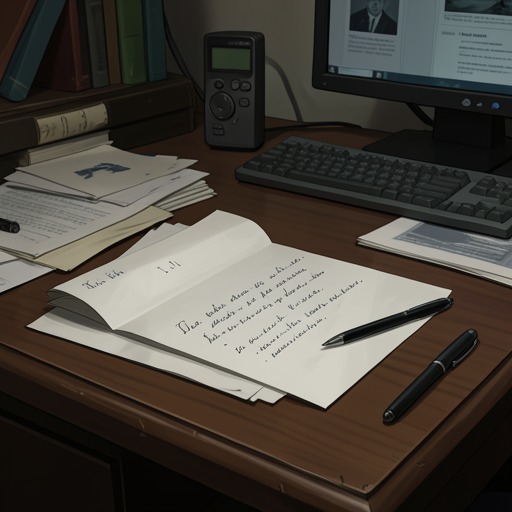
Even If This Love Disappears From the World TonightMaori’s Reminder to Remember Tooru is a private note Maori wrote to herself while living with anterograde amnesia: “Even if I recover, always remember Tooru Kamiya. The important things will always be in an important place.” Izumi Wataya finds it on the back of one of Maori’s reminder slips while replacing her records after Tooru Kamiya’s death. Concealed on the reverse, the note outlasts the effort to remove Tooru from Maori’s documented life; its wording later guides Izumi to understand that the important place is literal, linking the message to Maori’s hidden sketches of Tooru.
The Note and Its Placement
Maori’s daily memory reset means that the day’s experiences disappear from conscious recollection after sleep. She relies on a binder and journal to reconstruct her life each morning, so written records are not incidental: they are the practical structure through which she can understand who she is and what she has experienced. The note’s appeal to remember Tooru addresses the uncertainty built into that routine, imagining a time when Maori might recover and encounter her own history differently.
The note is not among the visible words on the reminder slip. Izumi discovers it attached to the back while preparing replacement sheets, and its hidden position gives the message a second audience: Maori herself, at a later time when she might take down the paper and see what had been concealed. Izumi reasons that Maori may have placed it there precisely so that she would find it upon recovering. She cannot know whether Maori anticipated the record-altering plan or simply wanted to preserve her feelings, but the note makes clear that remembering Tooru mattered to her beyond the immediate demands of the daily routine.
The Erasure and the Exception
After Tooru dies, Izumi and Tooru’s sister, Keiko Nishikawa, work to remove his traces from Maori’s records. Keiko offers to type the binder and journal into a computer and repair the passages altered to remove him. She also creates digital entries for the days after his death, while Izumi replaces the paper reminders with printed copies and moves Maori’s routine to a laptop. The change is designed to make the revised records seem continuous rather than conspicuously altered.
In this process, Izumi finds the note on the back of one of the old slips. Rather than discard it with the originals, she keeps the paper and its attached message, deciding that Maori should retain it. The gesture gives the note a distinct status among the materials being replaced: the record of Tooru is being edited away, but a message written by Maori asking that he be remembered is preserved. The note therefore survives not because the people managing the records overlook its meaning, but because Izumi recognizes that it may matter to Maori later.
The Important Place
The note’s phrase about important things being kept in an important place becomes intelligible when Maori later finds a sketchbook hidden behind her bookcase. She remembers that as a child she hid private belongings there because her father used to read the group journal she kept with friends. She had forgotten the hiding place after he stopped entering her room, but the sketchbook remained behind the bookcase.
When Maori asks about the drawings, Izumi initially tells her that Tooru was someone she had seen a few times at the library during summer break in high school. Izumi knows Maori has recovered from amnesia and believes she could eventually bear the truth, yet she hesitates to disclose their relationship. The discovery of the hidden sketches changes the significance of the note: Izumi recalls its wording and realizes that the important place was not metaphorical. Maori had left herself a message not to forget Tooru, and the hidden drawings were part of the same attempt to keep him accessible to her future self.
Memory Beyond the Written Record
The note belongs to a wider network of ways Maori’s experience is stored and revisited. During her amnesia, her binder and journal provide factual accounts of each day; her phone holds photos and videos of Tooru; and her sketching skills continue through practice even as particular days vanish from conscious memory. A video of a bicycle ride can make her long for the earlier version of herself who laughed with Tooru, while listening to his recorded voice later helps her begin to recall the ride. The note differs from these records because it is not simply evidence of what happened: it is an instruction from Maori to her future self about what should not be lost.
That instruction is not a guarantee that recovery will restore the relationship in a straightforward way. The note survives, but Maori’s memory of Tooru remains uncertain; even sensory reminders associated with shared experiences may bring her close to a recollection without completing it. Later, the drawings become images of Tooru as Maori remembers him, giving visible form to a return that cannot be reduced to the altered journal or the erased digital traces. The note’s force rests in this tension: written words can survive a reset and direct future attention, but the memory they ask to preserve must still be encountered and made one’s own.